Reader,
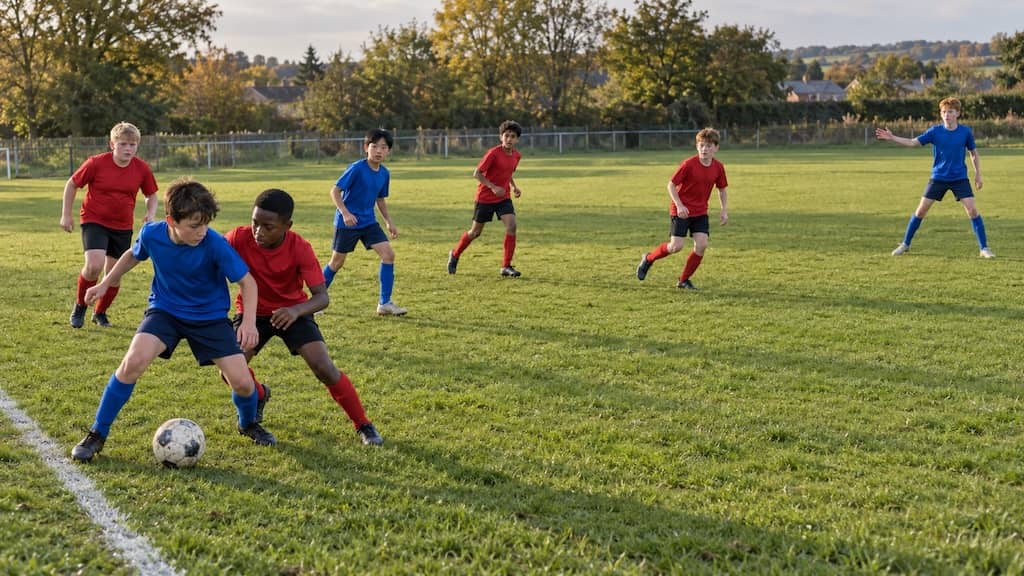
In youth games, a failed switch often begins before anyone attempts a long pass. The ball reaches the touchline, and the game becomes crowded. Three defenders press, two teammates offer short passes nearby, while the far-side winger stands in space. By the time anyone looks across, that space has gone.
The coach’s first task is to diagnose what is preventing the switch. Is there no supporting player behind the ball who can receive facing forward? Has the team lost its width away from the pressure? Would the eventual receiver struggle to control the ball and attack before the opposition recovers? Possession that deliberately draws pressure before moving to the opposite side depends on the coach recognising which of these conditions is missing.
Rather than repeatedly stopping the game to prescribe passes, shape the practice so players encounter the problem. Narrow the defending team’s starting position, mark wide channels, or reward an attack that reaches one side before progressing through the other. Using a supporting player to connect the change of direction also makes the practice accessible to players who cannot deliver a long diagonal pass.
Interventions can then focus on what players are noticing: Where is the pressure? Where is the available space? Who is providing the route out? The aim is not to make players switch automatically whenever the ball reaches a touchline. It is to help them recognise when continued play on one side is becoming predictable, and when moving the opposition can create a better opportunity elsewhere.
|
Have you started your PDP Membership?
Members get exclusive access to all PDP content, including session plans, video, and member-only offers.
|
|
|
|
Three Things to Consider
1. Create an escape pass. Ask one player to support behind or inside when the touchline becomes crowded. That player can face more of the pitch and connect the next pass.
2. Protect the far-side width. Do not let every player move towards the ball. A directional game that rewards finding a wide player on the opposite side can make staying away from the crowd valuable.
3. Attack after the switch. Encourage the receiver to take space, combine or play forward before the defence slides across. Switching followed by an immediate forward action links circulation to penetration.
One thing to try this week
Mark two wide channels in a directional game. Award one point for moving between them, but only if the far-side receiver then plays forward or carries into space. Ask which support pass made the switch possible.
One Critical Resource on the Topic
The PDP Q&A on coaching players to recognise and execute a switch of play is a focused resource for connecting the tactical cue with a usable training design.
|
Level up your coaching with PDP Academy Courses.
A few years ago, we set out to make the best online coaching courses in the world. Since then, we’ve published three online coaching courses we’re incredibly proud of.
Learn to coach, step-by-step, with guidance from our team of world-class coach developers.
|
|
|
“This course is brilliant. It gives real-world solutions to real-world problems.”
|
|
“Really recommend for anyone wishing to take a great leap forward in their understanding of coaching in a short time.”
|
|
“World-class instructors assisting you along the way to have a clear understanding of coaching and development.”
|
|
FAQ
Q: Should coaches ask for a switch every time the ball reaches the side?
No. If the team can progress or create a one-against-one advantage, stay with the attack. Switch when pressure closes the route and space exists elsewhere.
Q: What if players cannot make one long diagonal pass?
Use shorter passes through a supporting player. The target is reaching the far side at the right time, not proving who can kick furthest.
|
Need a custom session plan, FAST?
Coach Frank is a free mobile app for coaches that instantly creates custom session plans, designed to meet the needs of your players and environment.
Coach Frank is powered by a custom AI, trained on the entire PDP coaching library and refined over months of development.
|
|
|
Did a friend forward this email?
Sign up here and get exclusive content, lessons, and tools every week to help you become a great coach.
|
|
|