Reader,
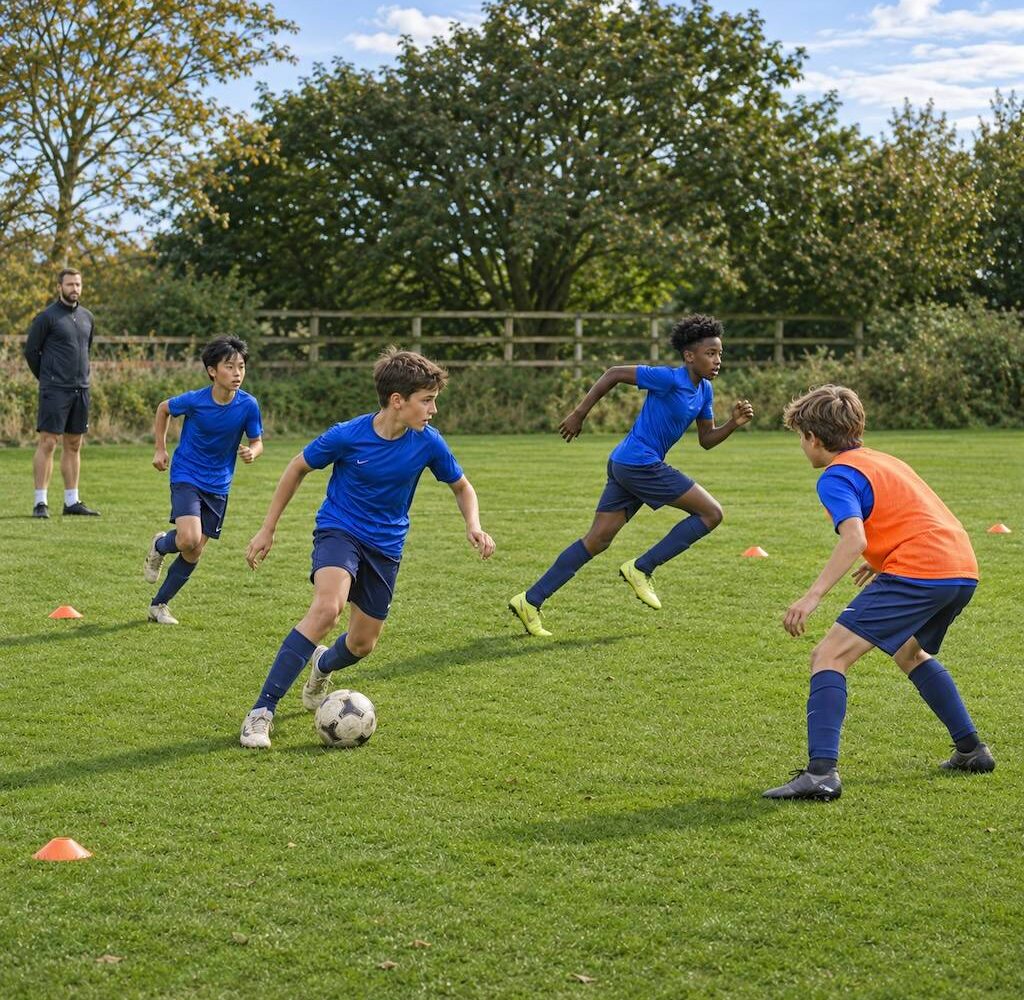
Teaching an overlap can look straightforward: the winger receives the ball, a teammate runs past on the outside, and a pass releases the runner towards goal.
But making the run does not automatically give the winger a better option. If the supporting player runs too close, one defender may be able to block the passing route while still putting pressure on the ball. If the run comes before the winger has control, the opportunity to pass may disappear before they can use it. Both players can understand the movement and still struggle to make it work together.
Part of the problem is that players can learn the movement without understanding its purpose. An overlap is a run from behind the ball carrier into space outside them. When the attackers have enough distance between them and the timing is right, it can force a defender to choose between putting pressure on the ball and covering the runner. That is what makes combining to release a teammate into space useful. If the defender follows the runner, the winger may have room to carry the ball inside. If the defender closes down the winger, a pass outside may become available. The run can therefore help the attack even when the runner never receives.
That distinction is easy to lose when a practice rewards completing the overlap rather than recognising the opening. If every attack must finish with a pass to the outside runner, players have little reason to notice the defender’s response. A winger who dribbles into the space left inside might have made a good decision, yet feel they have ignored the coach’s instructions. Keeping wide and central routes available gives the overlap a purpose beyond completing a rehearsed sequence: it helps players find a way forward against the opponent in front of them.
For coaches, the starting point is to observe what the run changes. When an overlap fails, look at whether the winger had control of the ball, whether the runner offered a genuinely separate passing route, and how the defender reacted. Those observations help distinguish a timing or spacing problem from a sensible decision not to pass.
In an opposed game where players can choose different combinations, the coaching task is to help them recognise those differences. The aim is for players to understand when the outside pass is available, when the run frees the winger to dribble, and when another option is needed.